
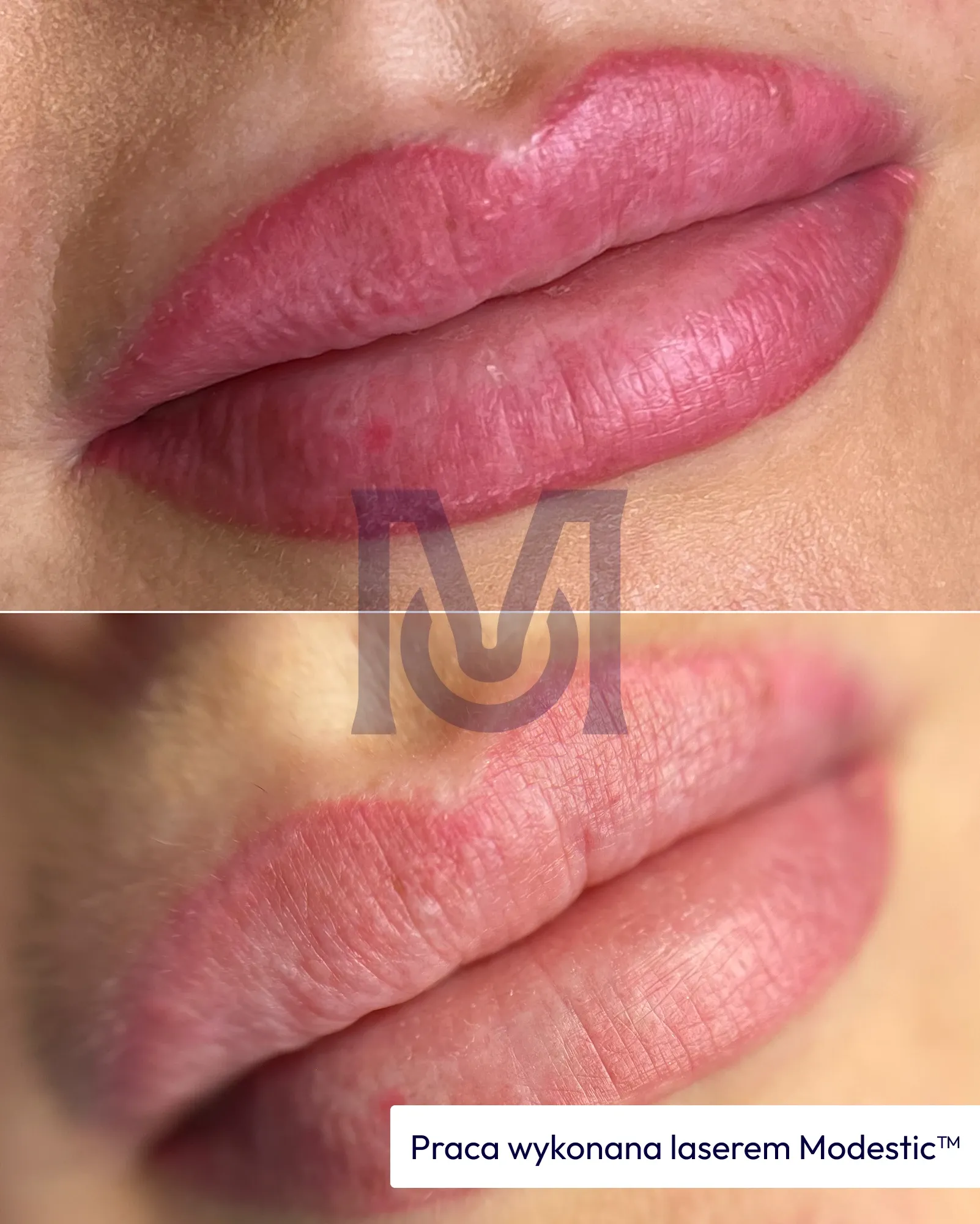
When to consider removing lip PMU
The most common reasons:
- The colour changed shade — lips turned brown, greyish or "cold". That's the pigment breaking down and reacting with the skin.
- The contour blurred or "migrated" — the line lost its sharpness or crept past the natural border of the lips.
- Too dark or unnatural colour — an intense shade that was once on-trend now weighs the face down.
- Asymmetry — one side higher, stronger or a different shade.
- You want a refresh — before new lip makeup (e.g. lip blush) it's better to clear the old pigment first.
You don't have to assume we'll remove everything — sometimes lightening and a correction are enough. We settle that at the consultation. We also remove eyebrow permanent makeup.
How lip PMU removal works
We shatter the pigment with a picosecond laser — short pulses of light break it down and the body clears it over the following weeks. With lips, though, caution matters more than anywhere else:
- Consultation and pigment assessment. We check the shade, depth and what the lips were done with. We also ask about cold sores. We set a realistic plan. The consultation costs 250 PLN and comes back to you at your first treatment.
- Pigment test (test spot) — mandatory on lips. Lip pigments often contain compounds (iron oxides, titanium dioxide) that can darken sharply under the laser — from pink to grey or near-black. So we do a small test and watch the reaction before treating the whole lip.
- The treatment. Lips are sensitive and well-supplied with blood, so we use numbing cream and cooling. The treatment itself is short, but precision at the vermilion border matters.
Cold sores — what to know before the treatment
Any treatment on the lips (laser included) can trigger a cold-sore flare in people who get them. If you're prone to cold sores, tell us at the consultation — antiviral prophylaxis started before the session is usually recommended. It's a simple step that genuinely lowers the risk.
How many sessions and how long
Lips can be unpredictable — some pigments come off quickly, others resist or call for a more cautious pace after the test. It's usually 3–4 sessions spaced 6–8 weeks apart, but we'll give an honest number only after seeing how the lips react to the first session. Gaps are essential — the body needs time to clear the shattered pigment.
Aftercare
- for 1–3 days some swelling and a light scab are possible — that's normal,
- don't pick scabs or rub the lips,
- avoid hot, acidic and spicy food for a few days,
- keep lips moisturised as instructed, and protect them from the sun,
- if a cold sore appears — contact us.
We give full instructions in writing and stay in touch between sessions.
Safety: the two things that really matter
With lips, safety and outcome come down mainly to two things:
- A pigment test against paradoxical darkening — which is why lips aren't removed "on the spot".
- Cold-sore prophylaxis for those who are prone to them.
With correctly chosen parameters and proper aftercare the treatment leaves no scars — the skin returns to its normal appearance.
“I've now been three times for permanent lip makeup removal. Professionalism at the highest level, clean and sterile.”
How much lip PMU removal costs
The price depends on the area (just the contour or the whole lip), the type and depth of pigment, and the number of sessions. So we set a price range at the consultation, after looking at the lips and doing the test. The consultation costs 250 PLN, refunded at your first treatment. You'll find current price ranges in the price list, and sample outcomes in the before-and-after gallery.