
Why an entire sleeve cannot be treated in one session
Large tattoos — over 20×20 cm — and full sleeves require a different logistical approach from small designs. The primary reason is physiological: treating too large an area in a single session places excessive load on the immune system. The body must simultaneously heal a large skin surface and clear an enormous quantity of shattered pigment. This can lead to slower healing and, in extreme cases, complications.
For sleeves we therefore divide treatment into areas as standard. A typical split is the upper arm (bicep and tricep) in one session and the forearm in another. Alternating is also possible — one session upper, the next lower. Each area heals separately, which is considerably safer and delivers better results.
Splitting into areas increases the total number of appointments, but shortens recovery after each one and reduces the burden on the body. Over the long term this is always the better path.
How many sessions does a large tattoo removal take
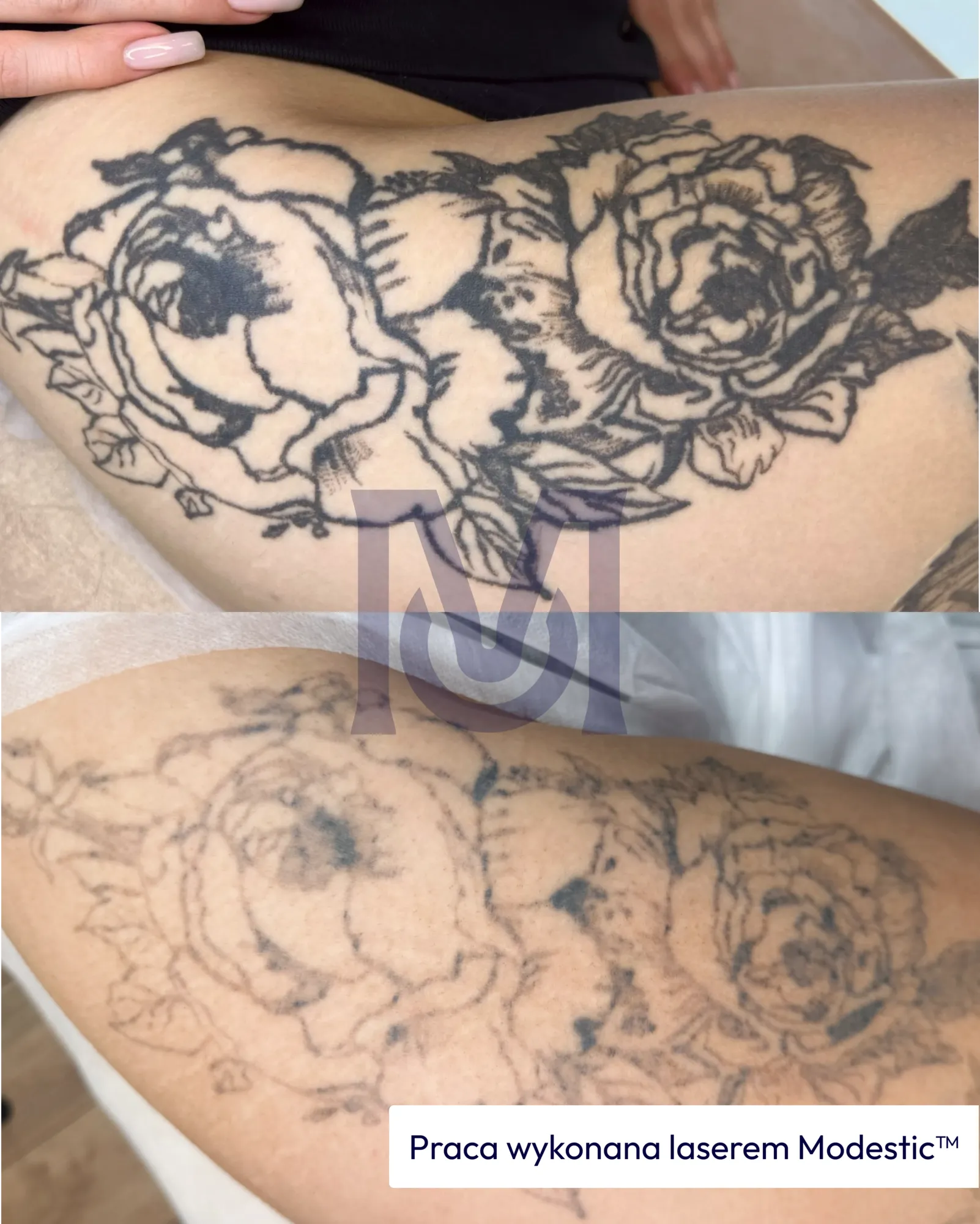
Straightforward maths applies here: if one area would typically need 8–12 sessions, and a sleeve is split into two areas (upper arm and forearm), the total number of appointments is 16–24 sessions or more, depending on colours, density and individual skin response. Sleeves with many colours or very dense ink may exceed this.
Session intervals remain standard — around 8 weeks. With two areas, treatment can alternate upper arm and forearm every 4 weeks (each area still gets 8 weeks of rest), which shortens the overall schedule. We discuss the optimal approach individually at the consultation.
More on how session counts are built up in the guide on how many sessions tattoo removal takes.
Colours in a sleeve — how they affect the timeline
Most sleeves are multi-colour compositions. Different colours respond differently to the laser — black and dark pigments clear most easily; green, blue and yellow may need more sessions or specific wavelengths.
When planning sleeve removal, the hardest colour sets the overall timeline for the entire tattoo. If a sleeve contains difficult colours, the full course can exceed 20–30 sessions per area and span several years in total. This is not a reason to give up — but realistic expectations from the outset make the process far easier to manage. Details on individual colours are in the guide on coloured tattoo removal.
Partial removal and lightening for a cover-up
Many people with a sleeve do not want to remove it entirely — they want to get rid of just one specific section (for example a wrist element, initials or a failed design). This is absolutely possible — we treat only the indicated area, leaving the rest of the tattoo untouched.
Another popular option is lightening the sleeve for a cover-up. A tattooist doing cover work often needs the old design to be noticeably faded — not completely removed. Such lightening typically takes 4–6 sessions instead of 8–12, significantly shortening the timeline and reducing cost. If you are considering this route, the best approach is to consult both your tattooist and us in advance — to agree on the degree of fading required.
More on the choice between removal and cover-up in the guide on removal or cover-up.
“I'm thrilled with the treatment. Kristina is a genuine expert in laser removal.”
Planning budget and timeline
Removing a sleeve is a multi-year investment. With 16–24 appointments spaced 4–8 weeks apart, the full process typically spans 2–4 years of regular sessions. It is worth thinking of this as a monthly or bimonthly financial commitment rather than a one-off expense.
The cost per session depends on the size of the area treated — detailed pricing is on the price page. An indicative total process cost is discussed at the consultation. More on financial planning in the guide on tattoo removal cost in Warsaw.
If you have a large tattoo or sleeve and are wondering where to start, book a consultation — we will look at the tattoo in person and propose a plan tailored to your goals, budget and schedule.