
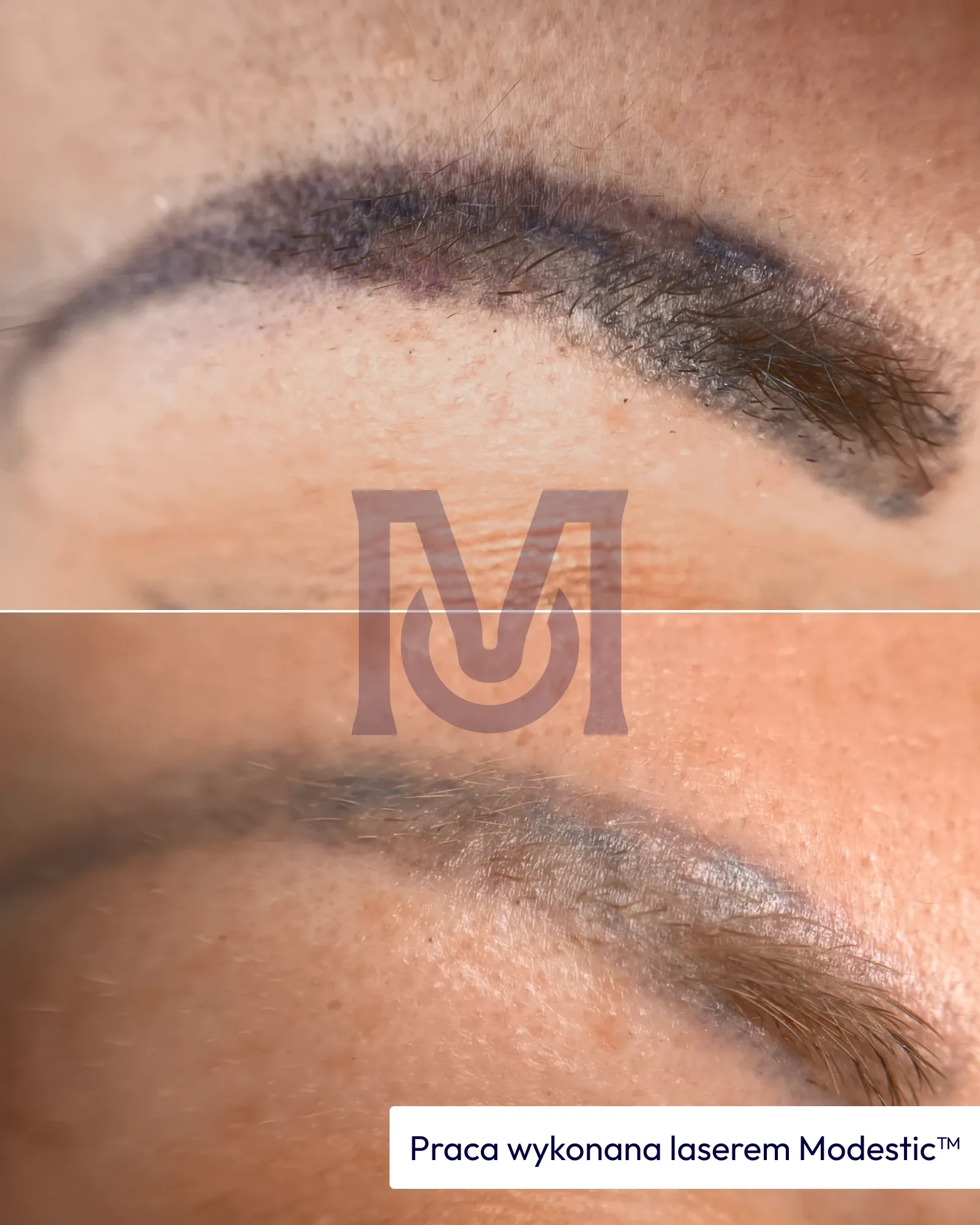
Why eyebrows change colour after PMU
Permanent makeup pigments are not meant to be as permanent as tattoo ink — that's by design. Over time the pigment particles break down, and which colour they "fade to" depends on the pigment's chemical composition, how deep it was implanted, and your skin phototype.
There's also a physical factor: pigment implanted too deep or at high density can gradually spread under the skin, causing the line to lose sharpness and shift to a cooler or more neutral shade.
Not every colour change signals a mistake — older pigments simply behave this way. A very rapid or dramatic shift is a different matter; it can indicate the pigment wasn't suited to your phototype or was placed at the wrong depth.
Grey and bluish brows — what happened
A grey or blue-violet shade is the most common shift with dark, carbon-based pigments. As the green and yellow components break down faster than the blue ones, what's left in the skin is a cool, greyish-blue base.
A similar effect comes from implanting the pigment too deep — viewed through a layer of skin, the colour reads cooler and greyer than it really is. That's why brows that looked a nice brown right after the procedure can look ashy a few years later.
Red and rusty brows — what it means
A red, orange or rusty shade most often comes from pigments containing iron oxides. Iron oxides are an ingredient in many PMU pigments (they give warm, brown tones), but over time they oxidise or reduce, shifting to rust and brick shades.
This matters particularly for laser removal: iron oxides can paradoxically darken under the laser pulse. That's why, with pigments containing these compounds, we always do a test spot on a small area before treating the full brow. It's not a reason to avoid laser removal, but it calls for extra care.
What can be done
Changed PMU pigment can be effectively removed or significantly lightened. There are two paths:
- Laser pigment removal — the picosecond laser shatters the pigment particles, which the body then clears. It works on most PMU pigments, though the speed and result depend on the pigment's composition. With iron-oxide pigments we always start with a test spot.
- Chemical remover — a substance introduced into the skin that draws pigment to the surface. An alternative to or complement of laser treatment; works well for pigments that respond poorly to the laser. More on the differences in the guide remover vs laser.
The right method is chosen after assessing the pigment at the consultation. Often we combine both techniques depending on how the pigment responds. For a full overview of the process, see the guide on permanent eyebrow makeup removal.
“My eyebrows went from an ugly grey shade back to a natural brown.”
When to act
A changed pigment colour often deepens over time — the older the change, the harder it is to predict how the pigment will respond to treatment. Acting sooner doesn't mean rushing into a procedure, but it's worth not putting the consultation off.
The one exception: if the permanent makeup was done recently. Laser PMU removal should only begin at least 6 months after the procedure, once the skin is fully healed and the pigment has stabilised. A chemical remover can be used sooner — after about a month.
If the colour is bothering you, the first step is a consultation — we assess the pigment and tell you plainly what to expect.