
How the body clears pigment — briefly on the mechanism
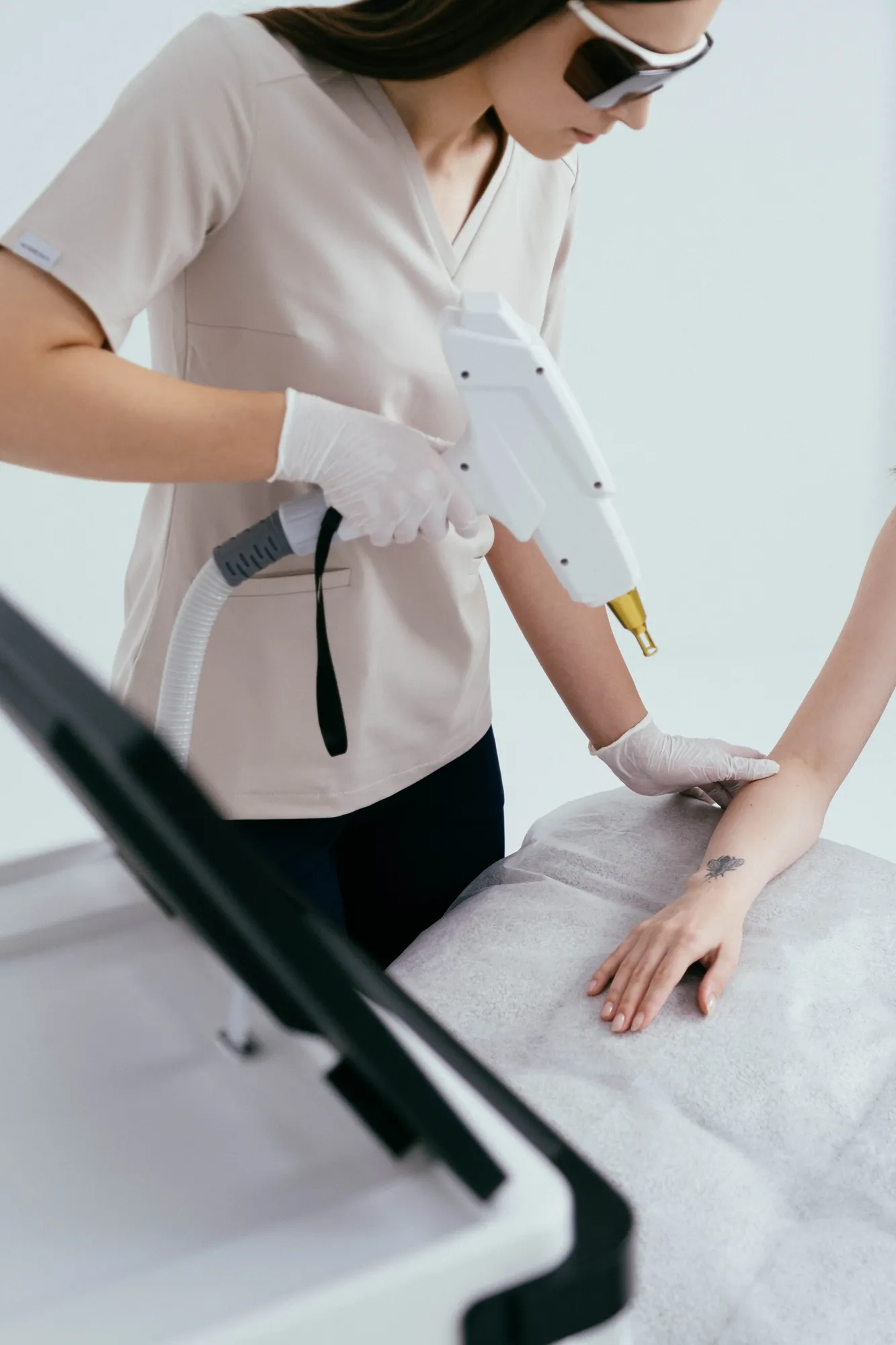
A picosecond laser doesn't "pull" ink out of the skin. It shatters it with a short pulse of light into very fine particles, and your own body does the rest: the fragmented pigment is carried away by the lymphatic system over the following weeks. It's a natural process — the same one the body uses to deal with other particles. That's why removal is spread over sessions roughly every 8 weeks: we give the body time to do its part.
It's also why a healthy lifestyle and good hydration genuinely help — you're supporting the natural route by which pigment is cleared.
Myths vs real risk
- "Shattered pigment poisons the body" — pigment is cleared naturally, like other particles.
- "The laser is radioactive / carcinogenic" — it's light of a specific wavelength, not ionising radiation.
- "Removal always leaves a scar" — with a picosecond laser the risk is low.
- Temporary redness, swelling and a scab — a normal healing reaction.
- Pigment changes (over- or de-pigmentation), especially with poor parameters on darker skin.
- Infection with poor aftercare — which is why the instructions matter.
In other words: the catastrophic "harmful to health" is mostly a myth, but real, minor risks do exist — and that's exactly what correct parameters and experience are for.
Contraindications
There are situations where we postpone or advise against the treatment. The most common:
- Pregnancy and breastfeeding.
- Active infection or broken skin at the tattoo site.
- A fresh tan in the treatment area.
- Some skin conditions, photosensitising medication and a tendency to keloids — assessed individually.
So we discuss every medical history at the consultation before we begin anything.
Why safety comes down to experience
The same laser in different hands means different safety. Parameters — fluence, wavelength, spot size — are matched to your skin type, ink colour, depth and body area. Poorly chosen settings, especially on darker skin, can lead to pigment changes. That's not a flaw of the method, but a matter of the operator's knowledge. We write more about how parameters depend on the skin, and about scarring risk, in separate guides: tattoo removal and skin type and colour and does removal leave scars.
“A steady hand and a real sense of safety in the hands of an outstanding specialist.”
Our approach
We start with an assessment of the skin and tattoo plus a health questionnaire, match the parameters to your case, and work without rushing, with healing gaps. If we see a contraindication or raised risk, we say so plainly rather than forcing it. The best start is a consultation, where we answer every question about safety in your specific case.