
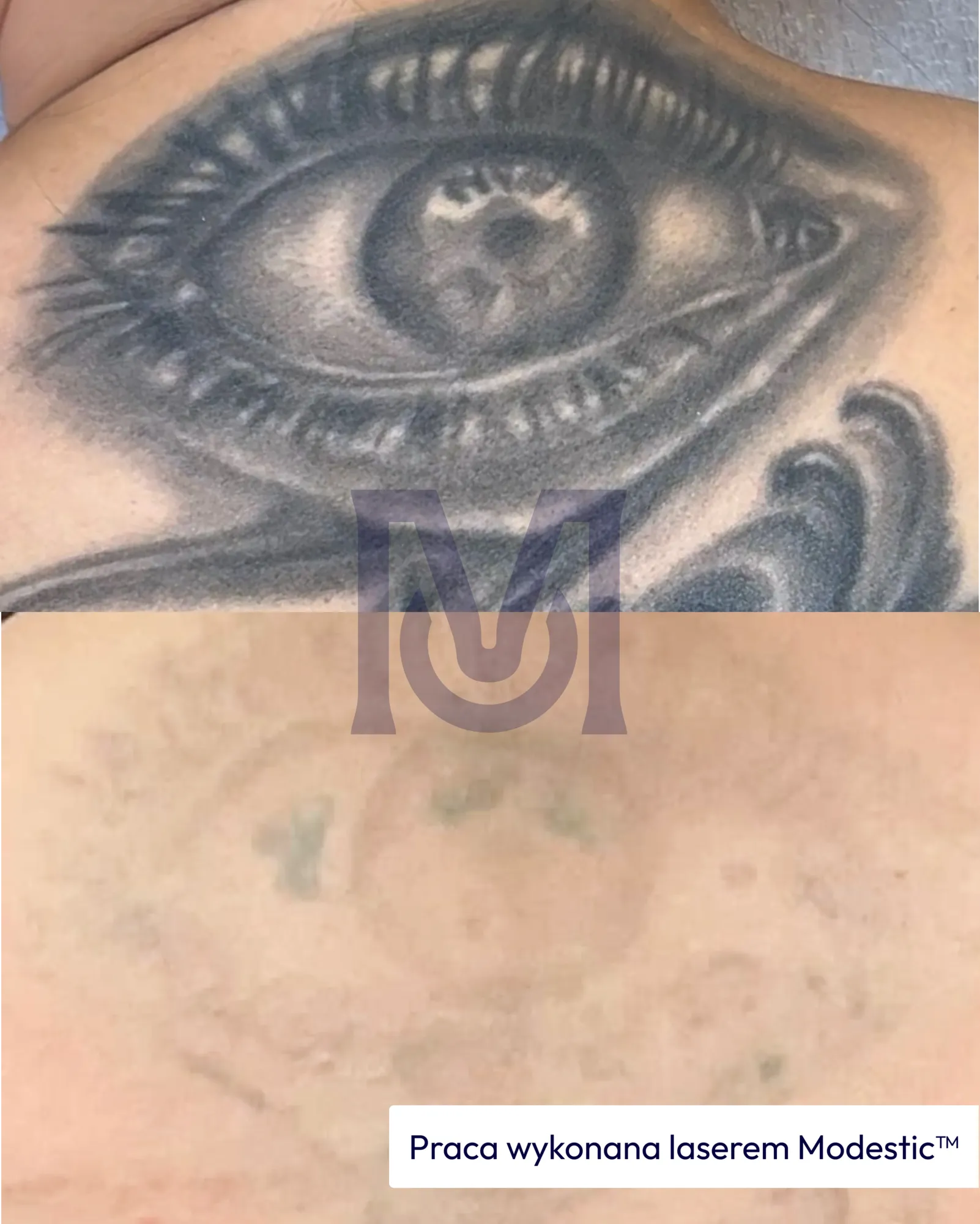
The short, honest answer
Yes — most tattoos can be removed completely or almost completely. "To zero, without a trace" is a realistic goal especially for black and dark tattoos done professionally. We won't promise, though, that every tattoo will vanish perfectly and in the same number of sessions — it depends on a few factors we cover below. An honest assessment up front matters more than an empty promise.
Which colours come off easier, and which harder
The laser only acts on pigments that absorb its wavelength — so colour matters enormously:
- Black and dark — the easiest; they absorb light best and usually come off most fully.
- Navy, dark green — usually respond well, though slower than black.
- Red, light green, blue — can be more stubborn and need more sessions.
- White, yellow, pastels and UV inks — the hardest; they absorb light poorly, and white can paradoxically darken — which is why we start with a test.
What else affects the final result
- The age of the tattoo. Older, faded tattoos often come off easier than fresh ones.
- Depth and saturation. Densely packed pigment needs more work.
- Who did it. An amateur tattoo can be shallower and easier; a deep professional one, harder. It's also about how evenly the ink was placed.
- Skin type and body area. They affect the choice of parameters and the pace — we cover this under the safety of the treatment.
How long and how many sessions
Tattoo removal usually takes 8–12 sessions, roughly every 8 weeks — so the whole thing spans more than a year, even though the treatment itself is short. Those gaps aren't wasted time: between sessions the body clears the fragmented pigment. We cover effectiveness and session count in more depth in separate guides: is tattoo removal effective and how many sessions tattoo removal takes.
“After just four sessions I can already see a major improvement. I'd recommend it to anyone considering tattoo removal.”
Realistic expectations — and how we set them
"Without a trace" is the goal we aim for, but honestly: sometimes the result is near-complete removal rather than absolute zero — especially with difficult colours. It's also worth knowing that a mark sometimes visible after removal can come from the tattooing itself, not the laser; we write about that under scars after tattoo removal. At the consultation we look at the tattoo, run a test, and tell you plainly what to realistically expect.
The surest way to understand your own case is a consultation — without guessing from the internet.