
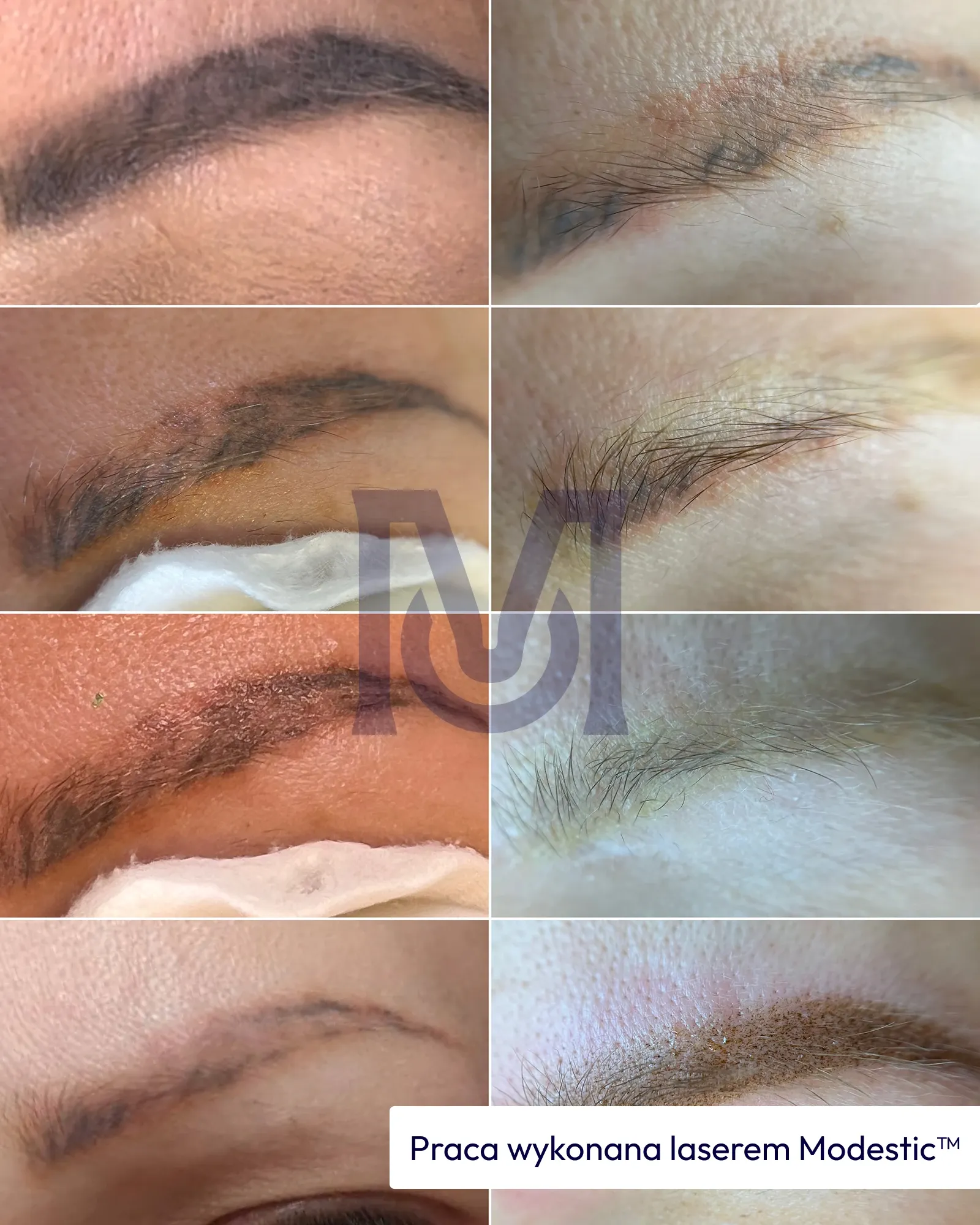
Microblading, ombré and powder brows — three different techniques
Although salons often lump them together as "permanent eyebrow makeup", these are different techniques that place pigment differently and age differently.
- Microblading — manual, hair-stroke incisions filled with pigment, meant to mimic individual hairs. The pigment sits shallow and unevenly; over time the strokes "blur" into patches.
- Ombré (powder, shaded) brows — pigment applied by machine for a shaded effect. Usually denser and set deeper than microblading, so it can be more saturated.
- Powder henna — despite the name, this is also a technique with pigment placed in the skin (not to be confused with cosmetic henna sitting on the surface). The result is soft, but follows the same rules of fading.
From a removal standpoint the name of the technique doesn't matter — what matters is which pigment sits in the skin, how deep, and how it behaves. That's why two people who had "the same" treatment can need entirely different plans.
Why pigment shifts colour — ginger, grey, blue
This is the most common reason people want their brows removed. PMU pigments are blends of colourants that fade at different rates. When the warm components leave first, the brow turns grey or bluish; when the warm components remain, it shifts toward rusty, ginger or orange. Depth adds to it: the deeper the pigment sits, the cooler (more blue) it looks through the skin.
This colour shift isn't an aftercare mistake — it's a natural process. What matters is how the shifted pigment reacts to removal, because not every shade comes off the same. We cover colour correction in more detail under botched permanent eyebrow makeup.
Laser or remover — what removes microblading
Both methods have their place and often complement each other. In short:
- Best for: dark, black and cool pigment — including blurred microblading.
- Upside: doesn't break the skin's surface with a needle.
- Watch out: light and "flesh-toned" shades can paradoxically darken — hence the test.
- Best for: colours the laser doesn't absorb (light, warm, ginger).
- Upside: reaches pigment trapped in scar tissue from hair strokes.
- Watch out: it breaks the skin — the practitioner's experience matters.
You'll find a full, honest comparison of both routes in our guide on remover vs laser for PMU removal.
Why we always start with a test
With brows we never guess. We do a small pigment test on a fragment and watch how it reacts before planning the whole job. It's the only reliable way to avoid paradoxical darkening of light shades and to match the method to how the pigment actually behaves. If it turns out your pigment will come off better with remover than laser, we'll say so plainly. The test is part of the consultation.
“I was very scared, but Kristina dispelled all my doubts. An incredibly kind person.”
How many sessions and how it works
Removing permanent eyebrow makeup usually takes 3–4 sessions, spaced out so the skin can heal between treatments. Microblading can be shallow and come off faster; densely packed ombré may need the full number. We set the exact plan and expected session count after looking at the brows and running the test. We describe the whole process step by step in a separate guide: permanent eyebrow makeup removal.
If the goal isn't full removal but lightening for new, correct makeup, we handle that too. It's best discussed at the consultation, where we assess the pigment and show you what to realistically expect.