
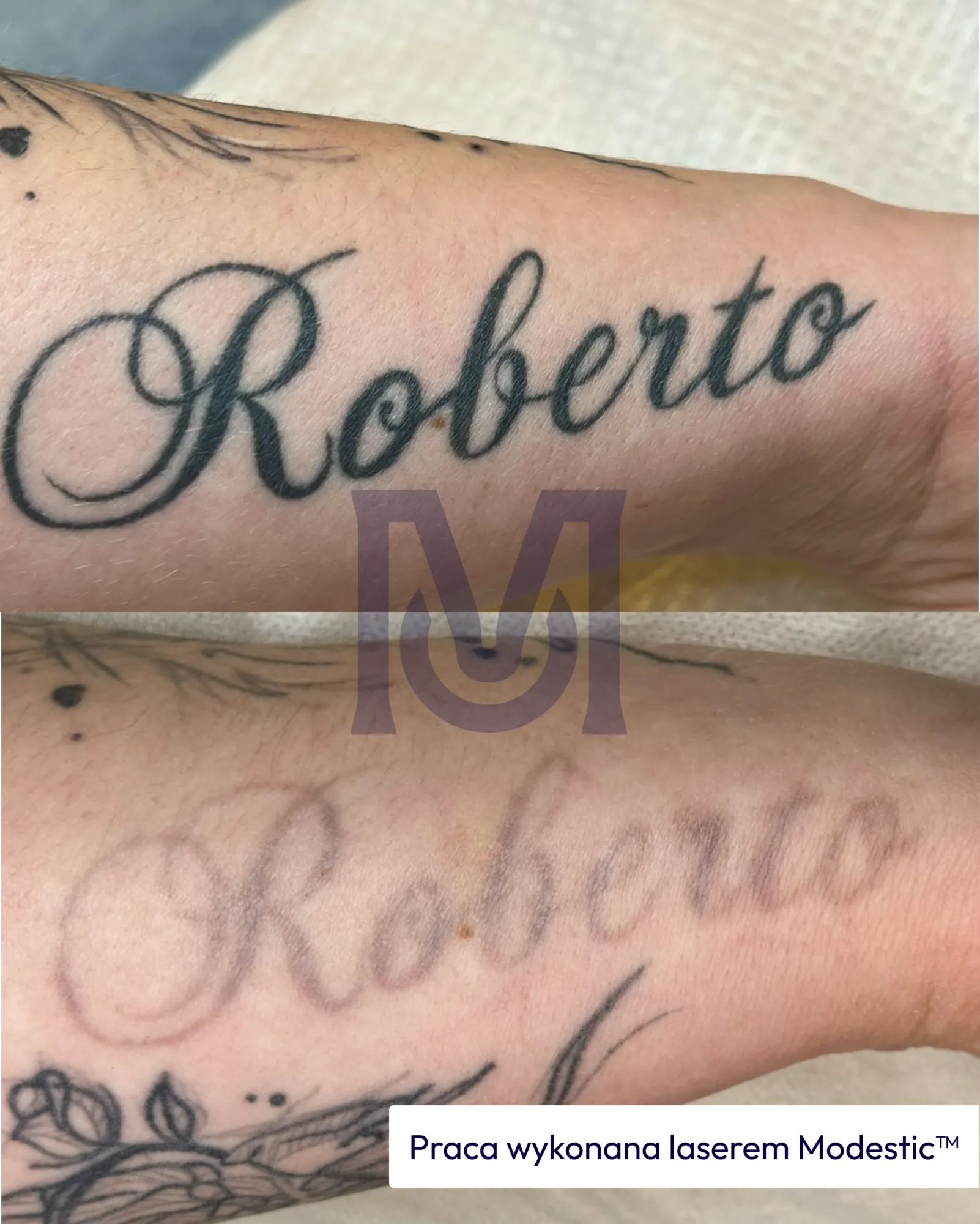
How a name tattoo looks from a laser perspective
Name tattoos are typically black or dark grey text — sometimes decorative script, sometimes block print, sometimes with ornamental elements. That is technically good news: black pigment absorbs a wide spectrum of laser light and is among the easiest pigments to remove.
A realistic plan for professional black-text work is 8–12 sessions spaced about 8 weeks apart. If the text is thin, done amateurishly or relatively old, the session count may be lower. A recent, well-saturated tattoo by a skilled artist may need the full range or more.
For a full explanation of how the process works physically, see the guide how to remove a tattoo.
As for the personal dimension of the appointment — you don't need to explain anything. We treat every session with the same discretion as a medical consultation. The reason you want the tattoo removed is entirely your business.
Can you remove just part of the tattoo
Yes — and this is a fairly common scenario. The laser can be applied precisely to a chosen area. Typical situations:
- Removing the name while keeping the rest of the composition (a heart, a symbol, a date).
- Removing a date of birth or inscription while keeping a portrait.
- Fading a specific section so a tattoo artist can execute a cover-up over it.
Selective removal requires precision — at each session we mark the boundary of the target area and work only within it. The result is achievable, but the border between removed and retained ink may be visible for a few weeks after treatment (the skin tone difference normalises over the following months).
Memorial tattoos — a special case
Memorial tattoos — a name of someone who has passed, a date, a portrait — carry a different emotional weight. That does not make removal a wrong decision; it simply means it is worth approaching without pressure and with time to think.
A few technical points that distinguish memorial tattoos:
- Portraits and fine detail — a tattoo of a loved one's face often contains fine lines, shading and delicate tonal transitions. Removal follows the same path as any black-and-grey work, but a composition built on subtle shading can be harder to clear entirely than solid lettering.
- Name and date together — often both need removing, or just one. As noted above, selective work is possible.
- Partial removal and cover-up — if you want to replace the memorial tattoo with something new, you don't always need to remove it to zero. Sufficient fading opens up cover-up as an option.
“I'm in the middle of removing an ill-considered tattoo — even the first session shows visible results.”
Cover-up as an alternative or complement to full removal
A cover-up is a new tattoo placed over the old one. Without prior laser fading, tattoo artists have limited options — the new design has to be darker and more solid than the original to mask it effectively.
After a few sessions of laser fading, the picture changes:
- The artist has more creative freedom — lighter colours and finer lines become possible.
- The cover-up can look natural rather than like concealment.
- Some name tattoos only need 2–4 fading sessions to give an artist room to work with.
If you are considering a cover-up, it is worth talking to your tattoo artist first about how much fading the design needs before starting laser sessions with a specific goal in mind. More on this decision in the guide how to remove a tattoo.
Book a consultation so we can assess the tattoo in person and suggest a plan — full removal, selective fading or preparation for a cover-up. Pricing is on the price page.