
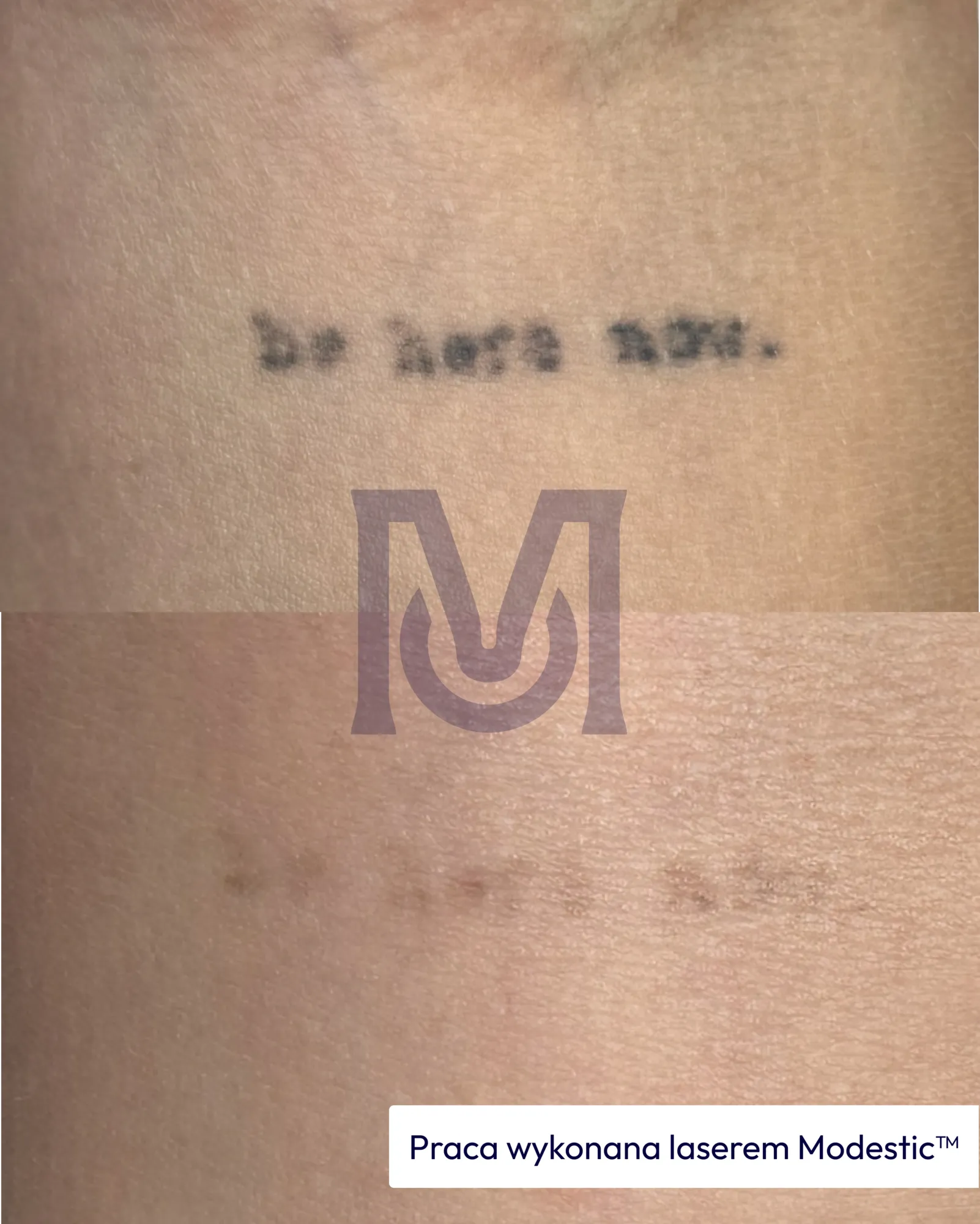
What the methods are — and what really works
Various ideas circulate about removing tattoos, but today only one is effective and safe: the picosecond laser. Briefly on the rest:
- Picosecond laser — the standard. Light shatters the pigment and the body clears it, without breaking the skin's surface.
- Creams and home methods — they don't work. They don't reach the pigment sitting deep in the skin, and they can irritate the skin and leave a mark.
- Mechanical methods (sanding, cutting) — invasive, with a high scarring risk; rarely justified today.
In other words: effective tattoo removal is almost always a picosecond laser in experienced hands.
How laser removal works
In short: a very short pulse of light hits the pigment and shatters it into particles small enough for the immune system to clear gradually. The tattoo doesn't vanish at once — it fades between sessions as the body "tidies up" the fragmented pigment. We break the mechanism down in a separate guide: how laser tattoo removal works.
What the process looks like, step by step
The whole process is repeatable and predictable:
- 1. Consultation — assessing the tattoo, skin and expectations.
- 2. Test patch — a small area, to see how skin and tattoo react.
- 3. Sessions — usually 8–12 treatments every roughly 8 weeks.
- 4. Healing and aftercare — between sessions your body does the work.
The gaps between sessions aren't a whim — they're the time the body needs to clear the shattered pigment and the skin to recover. We break down how long it takes here: how many sessions tattoo removal takes.
What affects the result
No two tattoos are alike — the pace and result depend on several factors:
- Colour — black and dark pigments come off most easily; some colours are harder.
- Age of the tattoo — an older, partly faded one usually responds better.
- Depth and amount of ink — dense, multi-layered tattoos need more sessions.
- Body area and skin type — affect the pace and the choice of parameters.
Will it leave a mark? With a picosecond laser and proper aftercare the scarring risk is low — we expand on it here: does tattoo removal leave scars.
“I recommend this studio for removing a tattoo — they truly know their craft.”
Pain, aftercare and cost
Pain. It's not a spa, but it's bearable — we use cooling and, if needed, numbing. More here: does tattoo removal hurt.
Aftercare. Between sessions your body does the work, so good habits and avoiding sun genuinely help. We collect the guidance here: tattoo removal aftercare.
Cost. It depends on size, colour, the tattoo's age and the number of sessions; we give the exact quote at the consultation. Details: how much tattoo removal costs in Warsaw.
The best first step is to book a consultation — we'll assess the tattoo and set a realistic plan.