
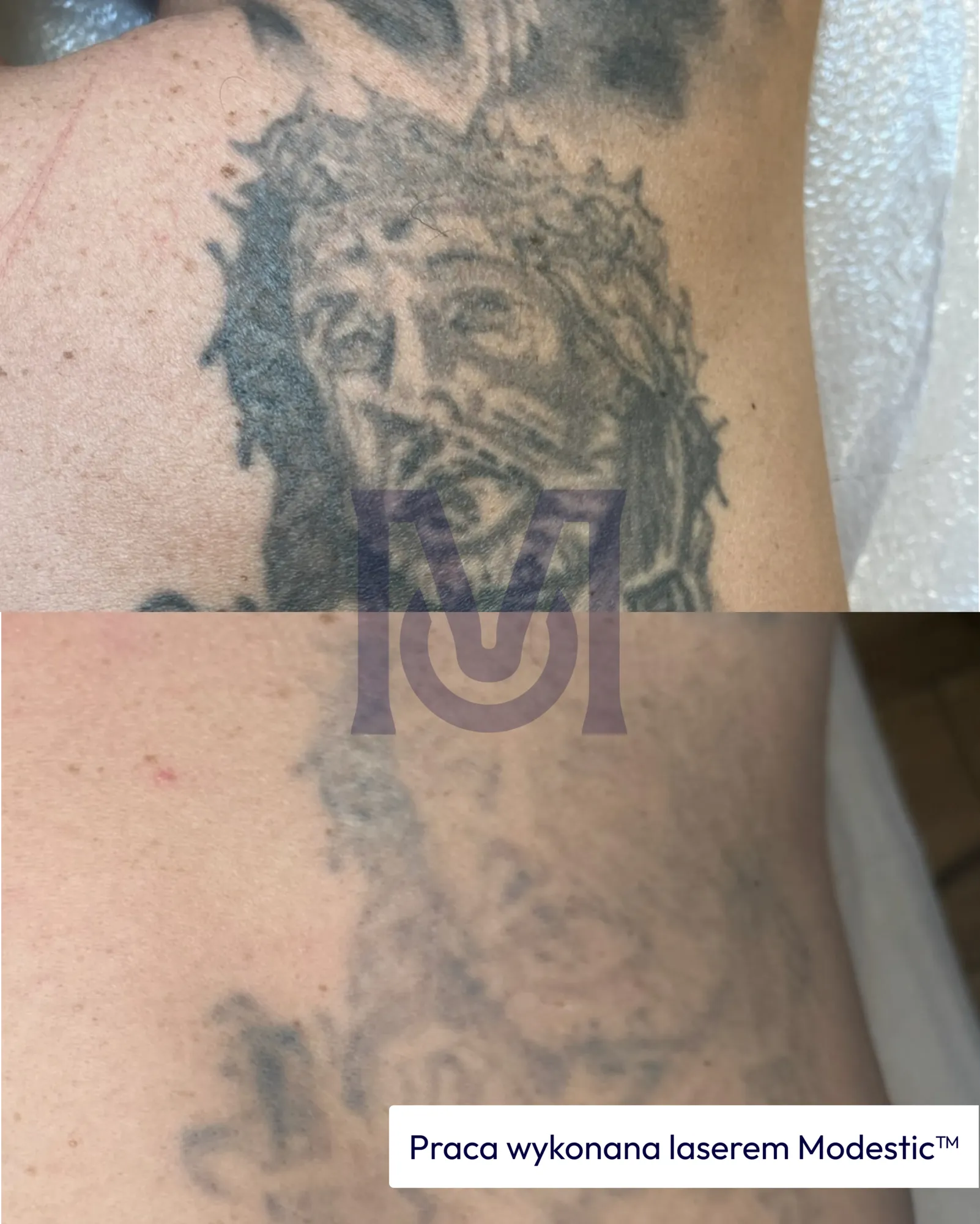
Why old tattoos come off more easily
From the moment a tattoo is placed, the immune system continuously tries to remove the ink particles as foreign bodies. Over the years, macrophages — immune cells — gradually absorb and carry away small fragments of pigment. This is exactly why a ten-year-old tattoo looks paler and less sharp than it did when it was first done.
The picosecond laser shatters those same particles into even smaller fragments that the body can efficiently clear. With an old tattoo, some of that work is already done — there is simply less pigment and it is less saturated. The laser is hitting a target that has been gradually shrinking for years.
How old is a good starting point
There is no single cut-off point at which a tattoo becomes "old", but the practical difference starts to show after a few years. As a rough guide:
- A tattoo done a year ago is still fresh from the laser's point of view — full ink density, no natural fading.
- A 5-year-old tattoo has had several years of gradual fading and may need a few fewer sessions.
- A 10-year-old tattoo or older — especially one that has visibly faded — can be a noticeably easier case. The same design done a year ago would probably require 10–12 sessions; the same design from a decade ago might clear in 6–8.
Age is one of several factors — ink colour, depth, location, and skin type also matter. We cover all of them in the article on how many sessions tattoo removal takes.
Fresh tattoo — why it's harder
A freshly done tattoo is ink at maximum saturation, placed at full dermal depth. The immune system is only just beginning to work on it, and the skin is still in the healing phase. Specifically:
- Maximum ink density. The pigment is exactly as the artist deposited it — none of it has disappeared yet.
- Depth at the dermal level. The ink sits at the depth that is optimal for the tattooist — and hardest for the laser.
- The skin is still settling. For the first 4–6 weeks the ink can still migrate slightly in the tissue, and the skin itself is not yet fully healed.
- No natural pre-fading. The immune system has not yet had any time to do its own work.
Touched-up and refreshed tattoos
A particular case is a tattoo that has been refreshed or topped up — a fresh layer of ink added over an old design. In that situation, the old sections may come off relatively easily, but the areas with new ink will put up greater resistance. The laser "sees" uneven depth and density — results may appear unevenly, depending on which parts were touched.
It is worth mentioning a touch-up during your consultation — it allows for better planning of the removal process.
“After just four sessions I can already see a major improvement. I'd recommend it to anyone considering tattoo removal.”
How long to wait before removal
Regardless of how quickly someone changes their mind after a tattoo appointment, laser removal cannot begin immediately. The minimum waiting period is 6 months from the date the tattoo was done. During that time:
- the skin fully heals from the tattooing procedure itself,
- the ink stabilises in the dermis,
- the deeper tissue layers the laser works on have time to heal completely.
The skin surface heals within 4–6 weeks, but the laser works on deeper layers — and these need more time. Laser treatment on unhealed or unstable tissue carries a higher risk of complications and unpredictable results.
More on why immediate removal is ruled out in the article can you remove a tattoo right after getting it done. The basics of the whole process are covered in the guide how to remove a tattoo. To assess your specific case, book a consultation — indicative prices are in our pricing.