
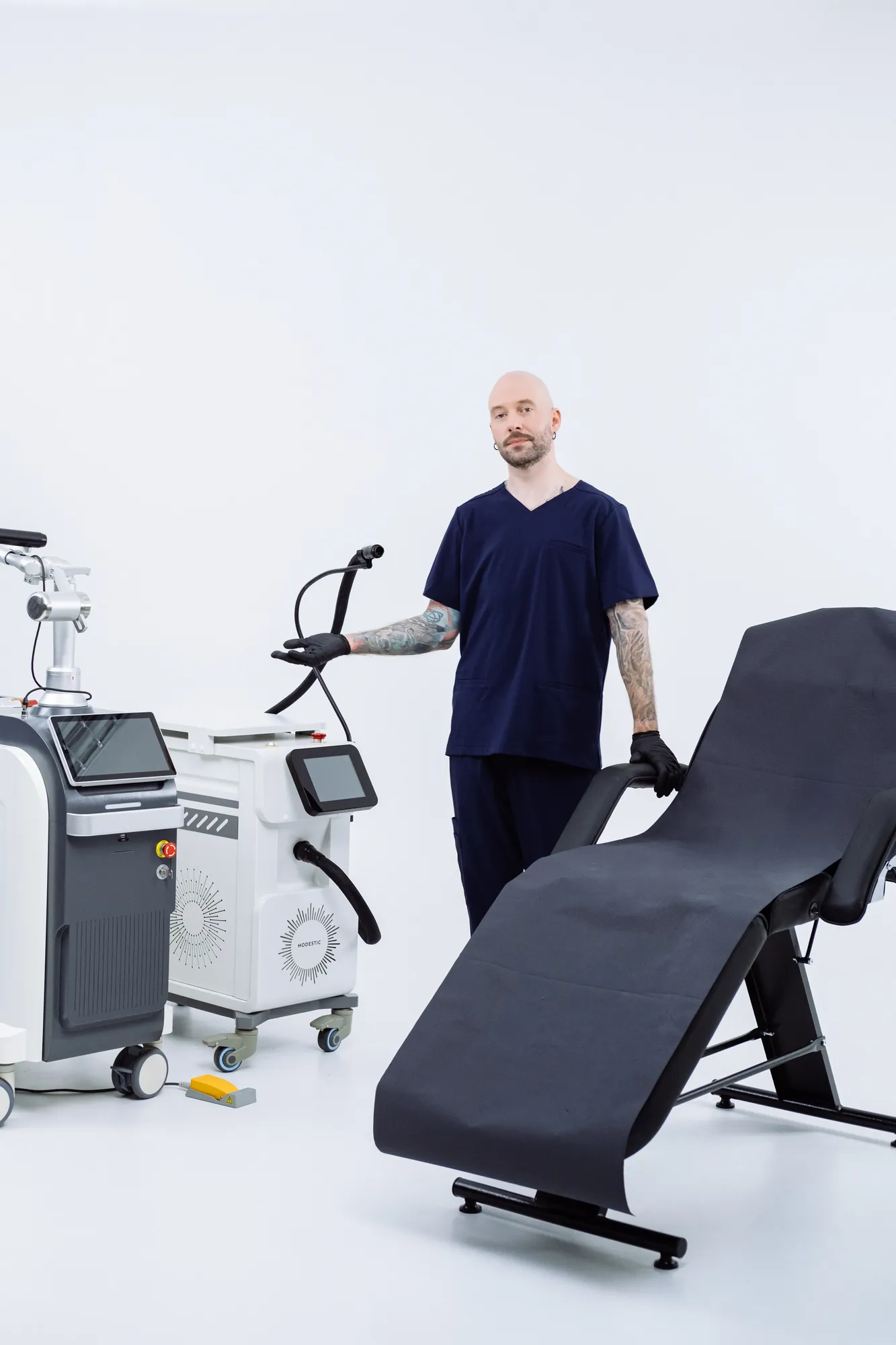
Absolute contraindications to laser tattoo removal
The following conditions rule out treatment until they resolve or end:
- Pregnancy and breastfeeding. Shattered ink particles enter the lymphatic system and bloodstream — the effect on a foetus or infant is unknown. We apply the precautionary principle. More in our article on tattoo removal during pregnancy and breastfeeding.
- Photosensitising medications. Isotretinoin (for acne) must be discontinued for at least 6–12 months before treatment — the skin is extremely sensitive while on it. Other photosensitisers include some antibiotics (e.g. doxycycline), St. John's Wort supplements and certain blood pressure medications. Disclose all medications at consultation.
- Active skin infection or open wounds at the treatment site. Laser on infected skin can spread the infection. We wait until full healing.
- Photosensitive epilepsy. Laser flashes can trigger seizures.
- Fresh tan or self-tanner on the treatment area. We require no active tan for at least 4 weeks before each session. More on how sun affects removal in our article on tattoo removal and sun exposure.
- Sunburn at the treatment site. The skin must be healthy and unirritiated.
Relative contraindications — timing or individual assessment
The following conditions do not automatically rule out treatment but require discussion and often deferral or a modified approach:
- Diabetes. Healing is slower and the immune response differs. Well-controlled diabetes (HbA1c below 7%) is generally manageable. Details in our article on tattoo removal with diabetes and other conditions.
- Immunosuppressant medications. These slow pigment clearance and healing. Assessed case by case.
- Active autoimmune conditions (e.g. lupus, psoriasis in the treatment area). A flare-up of symptoms after laser treatment is possible. We defer until remission.
- Chemotherapy within the past 6 months. The immune system is suppressed. We wait for oncologist clearance and health stabilisation.
- Anticoagulants (blood thinners). Increased bruising risk, but treatment is usually feasible. Discussed individually.
- Keloid tendency. Risk is site-specific — someone with keloids on the chest may not develop them on the arm. We assess the specific area and perform a test spot. Details in our article on keloid tendency.
- Melasma or vitiligo near the treatment area. Affects parameter selection. We discuss individual approach.
“Quick, smooth and safe. During the treatment everything is explained step by step, with care for your comfort.”
What to disclose at consultation
For a reliable assessment, at consultation please share:
- All medications — prescription, OTC and supplements.
- History of chronic and autoimmune conditions.
- Previous laser or other skin treatments.
- Recent sun exposure or sunbed use near the tattoo.
- Pregnancy, breastfeeding or plans to become pregnant.
- Any history of keloid or abnormal scarring.
Many "contraindications" are a matter of timing, not a permanent state. If you are on isotretinoin, we simply wait a few months. If you are pregnant, we begin after weaning. We assess each case individually.
If you have questions about your health situation, book a consultation — reserve a time slot. A general safety overview is in our article on whether laser tattoo removal is safe. Pricing on our pricing page.
For contraindications specific to permanent makeup removal, see our separate article on PMU removal contraindications.